Salivary Gland Cancers Registry
Audit Lead:
Criteria:
- All patients diagnosed with, being treated and followed-up for a salivary gland cancer
Data collection:
- Continuous, retrospective & prospective
- Consented
- Start of data collection: October 2023
Important documents:
Description:
Salivary gland cancers (SGC) are a group of rare cancers (around 8 or 9 per 1m people pa or < 800 new cases pa), which present a range of histological and clinical behaviours. They are generally slow growing, and patients can be followed up for 10 years or more before one is confident of the natural history of the histological entity. There is little or no strong evidence for their management as RCTs are too difficult or impossible to conduct for those cancers. One must rely instead on “real world” data, which can be collected in a controlled and standardised fashion in a clinical registry.
The SGC registry is a multidisciplinary project led by the British Association of Oral and Maxillofacial Surgeons (BAOMS). The SGC registry was designed by a Working Group that included OMFS consultants, the BAOMS Salivary Gland SSIG Lead and Deputy Lead, a Head and Neck pathologist, an OMF pathologist, a medical oncologist and representatives from Salivary Gland Cancer UK.
The registry collects both clinical information and patient-reported outcomes at various time-points.
QOMS has signed a collaboration agreement with the EURACAN consortium. EURACAN is a pan-European initiative that connects patients with rare adult solid cancers to expert healthcare centres across the European Union.
What does it involve?
To discuss what the project entails, please contact Fabien Puglia, QOMS Project Manager.
The first step is to contact your Information Governance or Audit department at your hospital to register the project (to help, feel free to cc Fabien). The protocol and data protection impact assessment (DPIA) above should be helpful with that application.
Once you have obtained approval, contact Fabien to obtain your unit’s unique QR code etc.
How does the project run?
Patient consent is wholly managed online: patients scan a QR code (on their phones/tablets or computers either in the department or at home) to read an information leaflet and sign a consent form. They should then be directed to the first PROM questionnaire. Subsequent questionnaires will be automatically managed by the online system.
FlexFacs webinar (BAOMS members only): Review of salivary gland cancers and QOMS (Speakers: Mr Michael Ho, Dr Fabien Puglia)
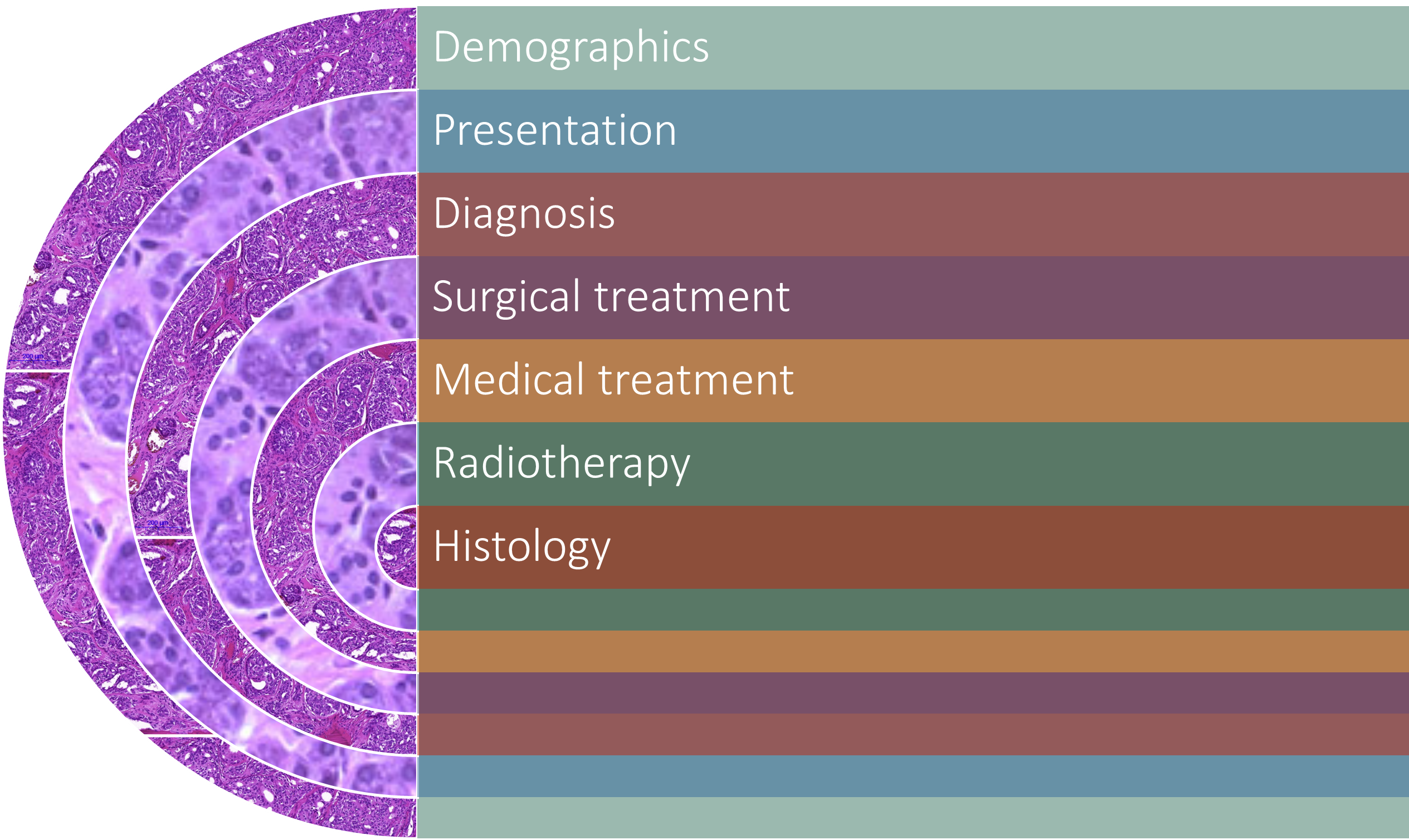
Figure – Data collection for the Salivary Gland Cancers registry
Contact us
If you have any questions or thoughts you’d like to share with us, please contact Fabien Puglia, QOMS Project Manager
Last updated: 09/2026